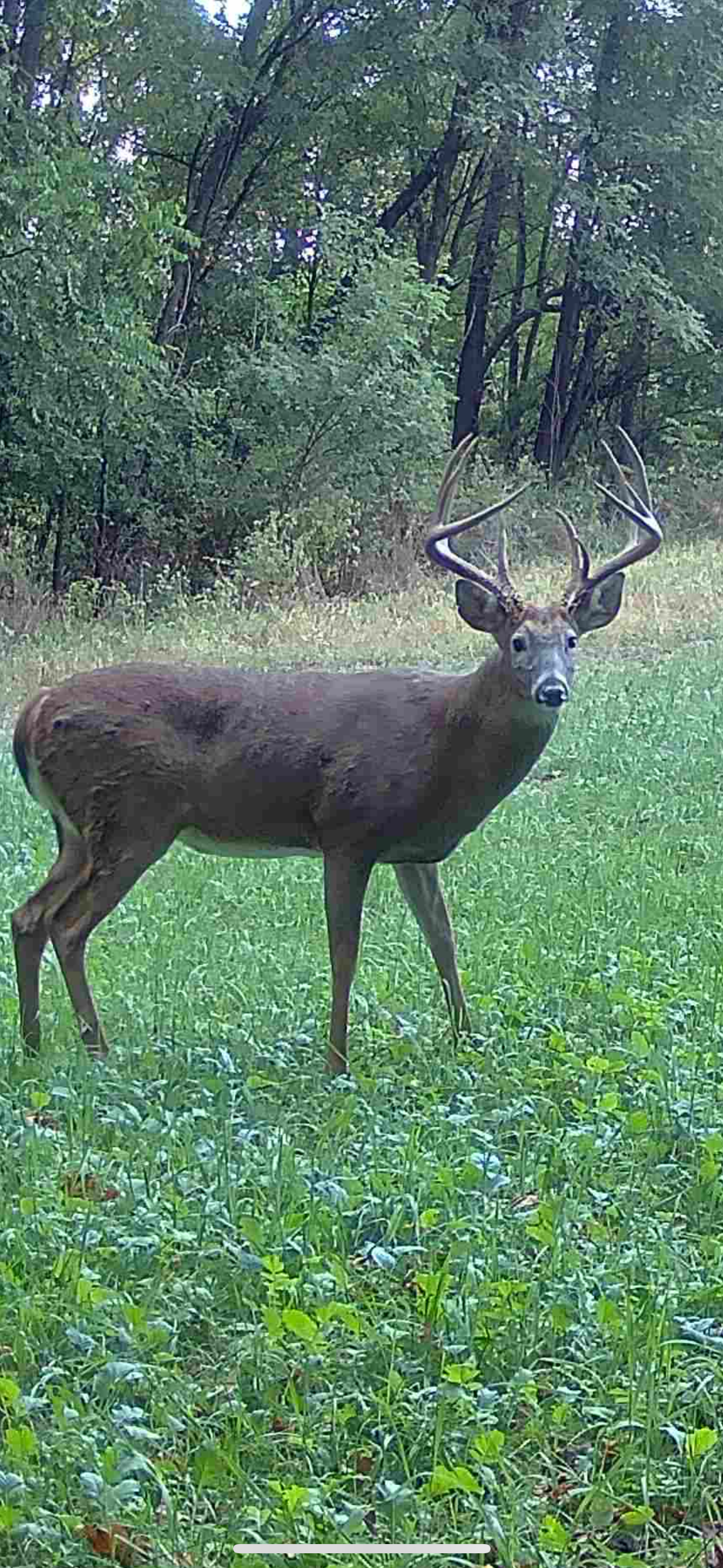
September Trail Camera Observations: Where Did All the Bucks Go?
Season is almost here! We're just a little over a week away from what I consider the very best time of the year, and I wanted to share a few observations from my trail cameras over the past several weeks.
Late August and early September brought some of the warmest weather I can remember for this time of year. I run several cellular cameras, and I will start with a disclaimer: I've always experienced a shortage of buck pictures during this particular stretch of the season.
I think there are several reasons for that, and understanding those reasons can help us make better decisions as we transition from summer into fall.
My Summer Camera Strategy
During the summer, I typically run cameras on traditional mineral or food sites to establish my summer inventory. I use nearly the same locations every year, and I do that for a couple of reasons.
First, resident deer become accustomed to those locations and the cameras that are there.
I've discussed this before, but certain bucks have a tendency to shy away from cameras, and some seem to absolutely hate them. However, I've observed that those same deer often aren't nearly as camera-shy at my traditional summer locations.
If a buck grew up on one of these properties, he's likely been seeing cameras at these same locations since he was a yearling. It's simply part of his environment.
I've had bucks that show a negative response to cameras in other locations but seem to tolerate them at these established summer sites.
That's something worth considering if you own, lease, or have hunted the same property for several years. Establishing consistent summer camera locations may help you get pictures of bucks that are otherwise difficult to capture.
The second reason I use the same spots is that the deer know where to go during those months. They've learned to associate those locations with something positive, whether that's mineral or food.
Over the years, some of my locations have changed due to habitat changes, fields being converted, fencerows being removed, or other changes to the landscape. But when I'm establishing a summer location, I generally prefer to keep it along an edge where I can access it easily.
I don't want to walk clear back into the woods every time I have a camera issue or need to carry feed or mineral to a site.
The less unnecessary disturbance I create, the better.
Why Bucks Tolerate More During the Summer
Another interesting observation is that bucks generally seem much more tolerant of human scent and presence during the summer months.
One of the reasons I believe this happens is related to their testosterone levels.
During the summer, testosterone levels are relatively low. Bucks are often hanging out in bachelor groups, and their behavior is generally more passive.
As they transition into hard antler, testosterone begins increasing and eventually reaches its seasonal peak around the breeding season.
That hormonal change plays a major role in their behavior.
Think about the difference between a passive, laid-back individual and someone who is constantly keyed up and ready for confrontation. That's somewhat how I think about the behavioral transition bucks go through as fall approaches.
The same buck that tolerated a little human intrusion during the summer may respond very differently once his testosterone begins increasing and his priorities change.
That's one reason I try not to assume that what I can get away with in July or August will work in October.
So Where Did All My Bucks Go?
This brings me back to the shortage of pictures I've experienced over the past several weeks.
One reason is that I stop putting out mineral and supplemental feed after end of July. I want those attractants removed well before hunting season, and the deer are naturally using mineral sites less frequently than they were during the earlier antler-growing months anyway.
Combine that with the unusually warm weather we've experienced, and my camera activity really slowed down.
In fact, last week may have produced the fewest pictures I've ever received during this part of the year.
It got to the point where I was becoming concerned.
And if you've experienced EHD before, you probably understand why.
The EHD Concern
This is the time of year when EHD can rear its ugly head.
Our property was absolutely decimated by EHD back in the early 2010s and then experienced another outbreak a few years later.
If you've ever gone through it, you know how devastating it can be.
The herd can recover numerically in only two or three years, but rebuilding the age structure of your bucks takes considerably longer.
You can't replace a mature buck overnight.
I wasn't necessarily expecting a major EHD problem this year because we stayed relatively wet throughout the summer. During one of our previous outbreaks, we had gone approximately 40 days without measurable precipitation.
That certainly wasn't the case this year.
I've also wondered whether our local deer herd may be developing some level of resistance to the disease, although I recognize that the viruses involved can vary and that surviving one outbreak doesn't necessarily protect deer from another.
My observations from those previous outbreaks were interesting.
During the first outbreak, it seemed that once a deer became sick, it was often dead within a matter of days.
During the later outbreak, I noticed something different. Not every deer that appeared to be affected died immediately. I observed bucks with velvet remaining on the tips of their antlers and deer that appeared sick throughout portions of the fall.
I suspect we may have lost some of those deer later in the season.
I'm hopeful that our northern deer herd is gradually developing some resistance that allows more deer to survive these outbreaks.
Regardless, when your cameras suddenly go quiet during a hot September stretch, it's hard not to think about EHD if you've experienced it firsthand.
Fortunately, the past week has brought some encouraging signs.
Cooler Weather and Returning Buck Activity
With the arrival of some cooler air, my camera activity has started picking back up.
I've received some good pictures again, including my number-one target buck.
That's certainly encouraging after such a slow stretch.
Looking ahead, it appears we may have average to slightly below-average temperatures for the youth season and opening day.
I'll gladly take that!
Now, as we approach October, my camera strategy begins to change.
Where Are My Cameras Now?
At this point, I've transitioned most of my cameras away from the traditional summer inventory locations and onto scrapes and field edges, which often have scrapes nearby as well.
One thing I've learned over the years is that bucks can shift considerably as we move into October.
Don't expect every buck to continue using the same summer patterns.
Some will remain in a similar home range but begin using it differently. Others may shift into an entirely different fall range, sometimes moving off your property altogether.
If I had to put a rough number on what I've observed, I'd say approximately 60% of the bucks maintain a somewhat similar range, although their patterns change, while the other 40% may establish a different fall range.
Those aren't scientific percentages, just my observations from years of watching individual bucks.
And remember, that movement goes both ways.
Just as some of your summer bucks may disappear, other bucks may begin showing up on your property as their fall ranges develop.
Don't automatically assume a buck is dead simply because he disappears from your summer cameras.
He may just be somewhere else.
The Most Valuable Information My Cameras Give Me
One of the biggest things my cameras provide is the ability to identify annual patterns.
I use several inexpensive, non-cellular cameras in addition to my cellular cameras.
I often take one with me when I go hunting and place it in a location that I won't check until after the season. Occasionally, I'll check one if I'm naturally passing by it on my way to or from a stand, but I don't make special trips just to pull cards.
Those cameras can provide some of the most valuable information I collect.
They allow me to look back after the season and piece together how particular bucks used the property throughout October and November.
Where was he traveling?
When did he begin showing up?
Was he using the same scrape or travel corridor at a similar time as the previous year?
Did he shift locations as the season progressed?
That information can be incredibly valuable when planning for the following season.
Sometimes the most useful picture isn't one that helps you kill a buck tomorrow. It's one that helps you understand how to kill him next year.
A Few Tips for Hanging Fall Cameras
One thing I generally avoid is placing cameras too tightly on a scrape or directly beside a trail.
Some deer will avoid cameras when they're too close, and certain bucks may avoid a location altogether if they notice a camera.
This is different from my traditional summer locations, where deer have become accustomed to seeing cameras year after year.
When placing fall cameras, I want to gather as much information as possible without unnecessarily influencing deer movement.
Another thing I pay close attention to is the background.
I like having a good, long view behind the area I'm monitoring.
For example, a deer may trigger a camera on the edge of a food plot, but the buck I'm actually interested in might be 50 yards behind him.
If I've positioned the camera correctly, I may still be able to identify that buck and learn something about how he's using the property.
My favorite locations are scrapes positioned along a pinch point with a field or food plot in the background.
Even better is a scrape beneath a white oak, or another oak producing acorns, that offers that same long view.
Now I have several things working together:
A scrape that deer naturally want to investigate.
A pinch point that concentrates movement.
A food source that gives deer another reason to use the area.
A camera angle that allows me to observe more than just the deer directly in front of the lens.
The goal is to gather as much information as possible with every trigger.
You aren't going to cover every square inch of your property with cameras, so make each location count.
Final Thoughts
We're just over a week away from the very best time of the year.
If your cameras have been slow lately, don't automatically assume your bucks are gone. Consider the changing food sources, shifting fall ranges, weather, and the fact that deer may simply be using your property differently than they were a month ago.
And if you've hunted the same property for several years, don't overlook the value of your historical camera information. Sometimes what happened last October is more valuable than what you're seeing on a camera today.
The more we understand the individual bucks we're hunting, the better we can anticipate their movements rather than simply reacting to them.
That's what makes this time of year so exciting. We're finally getting close to putting all those summer observations, camera pictures, and hours of preparation to work.
Good luck this season, and I hope you can take something from these observations and apply it to your own hunting property.
The Whitetail Blueprint
Helping You See What's Possible.
Casey Delks